
NVMe vs SSD Hosting: Which Is Right for Your Next Project?
In the rapidly evolving world of web hosting, choosing the right storage technology is paramount. When setting up a Virtual Private Server (VPS) or any hosting solution, you’ll often encounter two popular storage types: NVMe (Non-Volatile Memory Express) and SSD (Solid State Drive). Each has distinct advantages and drawbacks that can impact your project’s performance, reliability, and overall user experience. In this post, we’ll break down the differences between NVMe and SSD hosting, helping you make an informed decision for your next project.
Understanding SSD Hosting
What is SSD?
Solid State Drives (SSDs) are a type of data storage device that uses flash memory to store data. Unlike traditional Hard Disk Drives (HDDs), which rely on spinning disks and moving parts, SSDs have no mechanical components, offering faster read and write speeds. Here are some key benefits of SSD hosting:
- Speed: SSDs drastically reduce load times, making websites snappier.
- Durability: With no moving parts, SSDs are more resistant to physical shock and wear.
- Energy Efficiency: SSDs consume less power, which is beneficial for server environments.
When to Choose SSD Hosting
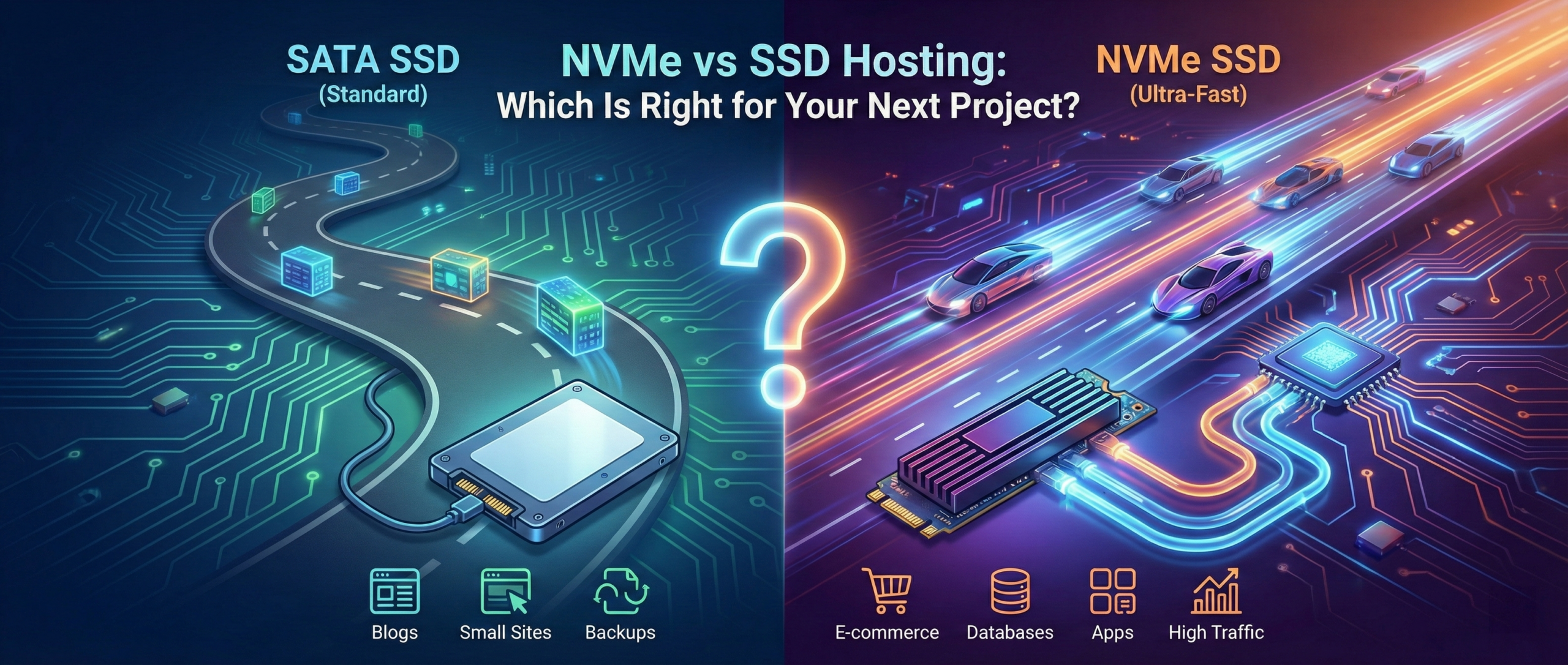
If your project involves moderate workloads, such as small to medium-sized websites, applications, or databases, SSD hosting is often sufficient. It strikes a balance between performance and cost, making it a popular choice for many developers and businesses.
What is NVMe?
Non-Volatile Memory Express (NVMe) is a storage protocol designed specifically for SSDs. It allows for faster data transfer rates and lower latency compared to traditional SATA SSDs by utilizing the PCIe (Peripheral Component Interconnect Express) interface. Here’s why NVMe is gaining traction:
- High Speed: NVMe can deliver speeds up to six times faster than SATA SSDs, ideal for high-performance applications.
- Low Latency: This technology minimizes latency, allowing for quicker access to data.
- Parallel Processing: NVMe supports multiple queues, enabling better multitasking and faster file processing.
When to Choose NVMe Hosting
For projects that require high-speed data access, such as big data applications, real-time analytics, or high-traffic e-commerce sites, NVMe hosting is the better option. Its superior performance can enhance user experience and improve application responsiveness.
Comparing NVMe and SSD Hosting
To help you decide between NVMe and SSD hosting, let’s compare the two based on different factors:
| Feature | SSD Hosting | NVMe Hosting |
|---|---|---|
| Speed | Moderate (up to 550 MB/s) | High (up to 7000 MB/s) |
| Latency | Higher latency | Lower latency |
| Ideal Usage | Small to medium workloads | High-performance applications |
| Cost | Generally less expensive | Higher cost |
Key Takeaways
- Performance Needs: Assess your project’s performance requirements. Smaller applications might thrive on SSD, while larger ones may benefit from NVMe.
- Budget: Consider your budget constraints. NVMe offers superior performance but at a higher cost.
- Scalability: As your project grows, ensure that your hosting solution can scale accordingly. Rackoona’s VPS platform supports seamless plan upgrades, allowing you to adapt as needed.
How Rackoona Can Help
At Rackoona, we understand that choosing the right hosting solution is crucial for your project’s success. Our modern VPS platform offers both SSD and NVMe hosting options, ensuring you have the flexibility to select the best fit for your needs. Here are some features that can enhance your hosting experience:
- Instant VPS Creation: Get started quickly with easy deployment processes.
- Global Regions/Node Groups: Benefit from low latency with our global infrastructure.
- Snapshot Capabilities: Easily create and restore snapshots to manage your data effectively.
- Activity Logs and Historical Metrics: Gain insights into your server performance, helping you make data-driven decisions.
To explore our hosting solutions and find the perfect plan, you can view our VPS plans.
Conclusion
Choosing between NVMe and SSD hosting depends largely on your specific project requirements, including performance needs and budget. For smaller applications, SSD may be the right choice, while larger, data-intensive projects will benefit from the speed and efficiency of NVMe.
Whichever option you choose, consider Rackoona as your VPS provider. With a focus on speed, reliability, and developer experience, we’re here to support your journey. Deploy your next VPS on Rackoona in minutes and experience the difference.
If you have any questions or need assistance, feel free to reach out through our contact page or email us at support@rackoona.com. Stay tuned to our blog for more insights and updates!